
Contributory Factors to Malnutrition in Children under Five Years Received in Consultation at the Pediatric Service of Saint Martin of Papane Hospital in Northeast Benin
Abstract
Malnutrition is a major global public health issue, especially in low-income regions. Identifying contributing factors is crucial for effective interventions. This study aims to determine the factors contributing to malnutrition among children under 5 years old at Papané Hospital in northeast Benin from April 6 to July 6, 2021. A descriptive and analytical study was conducted, involving structured questionnaires administered to 208 children aged 0 to 59 months and their parents or guardians. The study focused on socioeconomic characteristics and feeding practices. Predominantly male children (sex ratio 1.2) and mostly uneducated homemaker mothers were involved. Data were processed using Excel, WHO Anthro, and SPSS software. Statistical significance was assessed with SPSS, using a margin of error of 0.05. Results showed that 74.88% of the children experienced stunted growth, 90.34% suffered from wasting, and 79.43% were underweight. Exclusive breastfeeding was significantly linked to lower rates of severe malnutrition (p = 0.0075). Gradual weaning was associated with better nutritional outcomes compared to abrupt weaning (p = 0.000). Higher malnutrition rates were found among children of single mothers (36.06%) and those from polygamous households (49.52%). Maternal education level did not significantly affect children's nutritional status (p = 0.53). Breastfeeding practices and household dynamics are essential for improving the nutritional status of children under five. A multidimensional approach is needed to address the complex factors contributing to malnutrition.
Article Information
- Received
- Accepted
- Published
Copyright © 2026 Behanzin Gbessohele Justin, et al.
 This is an open-access article distributed under the terms of the Creative Commons Attribution License, which permits unrestricted use, distribution, and reproduction in any medium, provided the original author and source are credited.
Corresponding author: Bio Bouko Boni Orou Marius, Department of Physiology of Animals/ University of Abomey –Calavi of Benin —
Competing Interests
The author(s) declare(s) that there is no conflict of interest regarding the publication of this article.
Funding
The authors declare that they have received no funding for this article. They have self-funded this research.
Data Availability
The data that support the findings of this study are available from the corresponding author upon reasonable request.
Acknowledgements
We express our gratitude to Mr. DANHOUEGNON D. Romaric for assisting us in finding a comfortable internship location, and to Dr. KOUTHON Cossi Emile, Director of Saint Martin Hospital in Papanè, along with the entire staff, for their invaluable support in facilitating our research during the internship. Thank you for your consideration and commitment.
Citation:
Introduction
Malnutrition is a physiological condition caused by deficiencies, excesses, or imbalances in energy, macronutrients, or micronutrients. This can result from inadequate food intake or the body's inability to properly absorb nutrients from consumed food, often due to illness. 1 It is therefore the consequence of a diet insufficient in both quality and quantity, leading to protein and micronutrient deficiencies. 2 Despite progress made in combating all forms of malnutrition, stunted growth and wasting remain significant challenges in low-income countries. Additionally, iron deficiencies remain common among women, and the number of deaths and disabilities associated with poor-quality diets continues to rise. 3 Globally, at least one in three children under 5 years old does not develop properly due to one of the three most visible forms of malnutrition: stunted growth, wasting, and overweight. Moreover, at least one in two children under 5 years old suffers from hidden hunger due to deficiencies in vitamins and other essential nutrients. 4 In Africa, 30% of children under 5 years old are stunted, 5.8% suffer from wasting, and 38.9% are affected by hidden hunger. 5 In Benin, 32% of children suffer from stunted growth, 5% are wasted, 17% are underweight, and 2% are overweight. 6 In northern Benin, malnutrition remains a concerning issue with very high rates of stunted growth (57.3%), wasting (19.3%), and underweight (40.33%). 7 In the north-eastern part of the country, particularly in the communes of Borgou, including Tchaourou, the nutritional situation is very critical, with food insecurity affecting more than 32% of the population. 8 Malnutrition is a condition with severe consequences for health and human life. In Benin, the infant mortality rate is 89 deaths per 1,000 births, indicating that about 9% of children born in Benin die before their first birthday. Additionally, the under-five mortality rate is 160 deaths per 1,000 births, meaning that 16% of children born in Benin die before their fifth birthday. 9 In light of this alarming situation, we undertook this research to identify the determinants of malnutrition in children under 5 years old who are malnourished and admitted to Papanè Hospital, a commune located in the Borgou department in north-eastern Benin.
Subjects and Methods
Study Setting
Saint Martin of Papanè Hospital (HSMP) served as the setting for this research. Located at the border between the Borgou and Zou departments, within the village of Papanè in the commune of Tchaourou, this facility is situated 10 kilometers from Tchaourou. It spans an area of 7,256 km², providing a broad coverage area for the research needs.
Figure 1. Administrative Map of Saint Martin de Papanè Hospital (Commune of Tchaourou) Source: IGN Topographic Base 1992 & Fieldwork 2020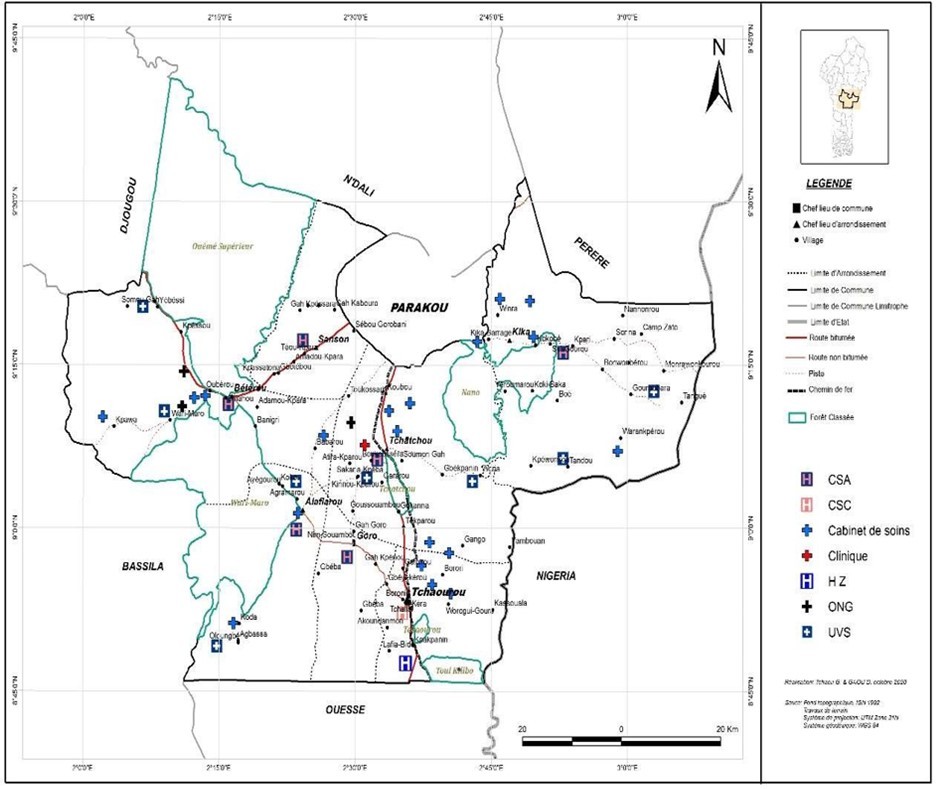
Download figure
Type and Period of Study
This is a descriptive and analytical study involving a sample of 208 children under 5 years old who were received in consultation at the pediatric service of Saint Martin de Papanè Hospital, along with their mothers. The study was conducted from April 6 to July 6, 2021. Our sample included all children under 5 years old who were consulted in the said service. The variables studied included age, sex, clinical aspects (nutritional status and associated complications), birth spacing, feeding practices (exclusive breastfeeding, complementary feeding, and weaning), parents' education level, their occupations, as well as their social status.
Data Collection and Processing
In total, two main types of data were collected: non-anthropometric and anthropometric data.
Non-Anthropometric Data
Non-anthropometric data were collected using a questionnaire designed for this purpose.
Anthropometric Data
Anthropometric measurements such as weight, height, and age of the children were collected following WHO procedures. 10 An ADE-type baby scale, a SECA-type scale (ENGLAND model, precision of 100g) was used to measure the children's weight, and a horizontal stadiometer (precision of 1mm) was used to measure their height. Age was determined either from birth certificates, health records, and maternity records of the mothers, or from information provided by the mothers or guardians of the children.
Data Processing
All data were recorded in a monitoring file created using Excel 2013. This software allowed us to calculate the percentage values of each parameter for the studied population and to construct distribution histograms. Data processing was performed using Excel, WHO Anthro, and SPSS. The latter was used to conduct significance tests between variables and the nutritional status of the children, with a margin of error of 0.05. The Chi-square test was considered significant for p < 0.05.
Data Analysis
Anthropometric indices, namely weight-for-age (W/A), height-for-age (H/A), and weight-for-height (W/H), were calculated using the WHO Anthro® software (version 3.2.2). The classification of children was done according to the following indices:
Weight-for-Age (W/A)
Moderate underweight: W/A below -2 SD
Severe underweight: W/A below -3 SD
Height-for-Age (H/A)
Moderate stunting: H/A below -2 SD
Severe stunting: H/A below -3 SD
Weight-for-Height (W/H)
Moderate wasting: W/H below -2 SD
Severe wasting: W/H below -3 SD
Risk of overweight: W/H above +1 SD
Overweight: W/H above +2 SD
Obesity: W/H above +3 SD
Additionally, the presence of bilateral edema was detected by gently pressing the thumb for a few seconds on the top of each foot; the child was considered to have edema if an indentation (a pit) remained on the foot when the thumb was removed.
Sampling
The sample was selected based on predefined inclusion criteria. In total, two hundred and eight (208) children meeting these criteria were included in this study. The purposive selection allowed the recruitment of participants relevant to the study objectives while adhering to the methodological requirements. However, as a non-probabilistic sampling approach, it may limit the generalizability of the findings.
Selection Criteria
Included in this study were all children under 5 years old (i.e., 59 months and younger) who were received in consultation at the pediatric service and whose parents consented to participate in the study. However, all children over 59 months, even if they were received in consultation under the same conditions, were excluded from our sample.
Ethical Considerations
Before beginning field activities, we obtained consent from the hospital authorities. The participation of individuals targeted for this study was then secured by their verbal agreement. In accordance with Law No. 2017-20 of April 20, 2018, on the Digital Code in the Republic of Benin, each participant was identified anonymously using a digital identifier. This law aims to protect personal data and the privacy of individuals by ensuring that their processing respects fundamental freedoms and rights. 11
Results
General characteristics of the study population
It appears from the analysis of Table 1 that the majority of children included in this research are male (55%). That is to say a sex ratio of 1.2 to the disadvantage of the female sex. The most represented age group is obtained among children aged 6-12 at the start of weaning (32.69%). The legal guardians (mothers or guardians) of the children received at the Papanè health center are mainly housewives (45.67%) and uneducated (56.73%).
Table 1. General characteristics of the population studied| Sex | Male | Female | ||||
| 55% | 45% | |||||
| Age | (0-6) | (6-12) | (12-24) | (24-59) | ||
| 16.83% | 32.69% | 27.88% | 22.60% | |||
| Educational level | Uneducated | Low level | Average level | Higher level | ||
| 56.73% | 25% | 13.46% | 4.8% | |||
| Occupations | Housewife | Artisan | State official | |||
| 45.67% | 41.83% | 12.5% | ||||
Contributing factors to malnutrition
Weaning mode and its determinants
It appears from Figure 2 that the majority of children (77.40%) were weaned abruptly and among the reasons underlying this type of weaning appear primarily the occurrence of closely spaced pregnancies (36.54%) and the episodes of illness (44.71%). Better still, only 11% of children were fed exclusively with breast milk.
Figure 2. Weaning mode and its determinants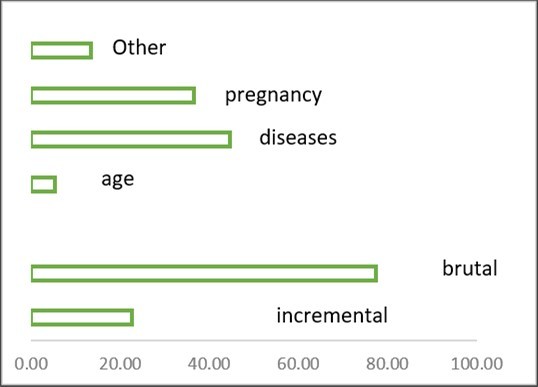
Download figure
Vaccination status and resumption of activities
Approximately 59.14% of children have an abnormal vaccination status compared to 40.86% with a normal vaccination status, including 15.38% in progress. Also, the time taken for new mothers to return to activities is generally less than 6 months after giving birth.
Figure 3. Breastfeeding mode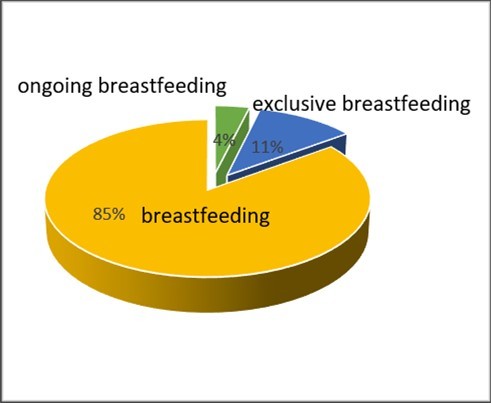
Download figure
Figure 4. Vaccination status and return to activity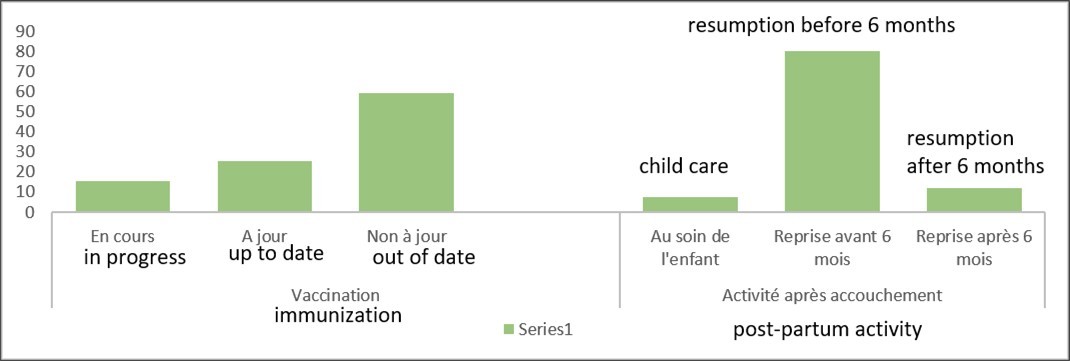
Download figure
Health status of children
It appears from Figure 5 that the most common illness encountered in children seen for consultation at the Papanè hospital center is diarrhea (35.10%). A high proportion of children suffered from vomiting (4.81%), and almost all presented Acute Respiratory Infection, with a percentage of 94.23%.
Figure 5. Health status of children 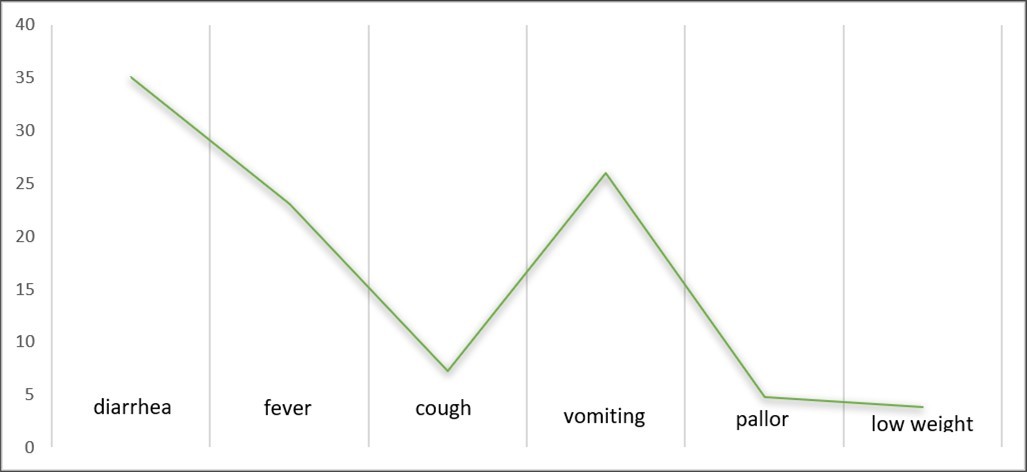
Download figure
Nutritional status of children
Distribution of children according to the T/A, P/A and P/T indices
The distribution of children according to their nutritional status revealed that 74.88% were stunted, 79.43% were underweight and 90.34% were wasted. Also, the distribution curves of the T/A (Figure 6), P/A (Figure 7), and P/T (Figure 8) indices show that they are shifted to the left. This indicates a situation of undernutrition in the population studied.
Figure 6. Indice T/A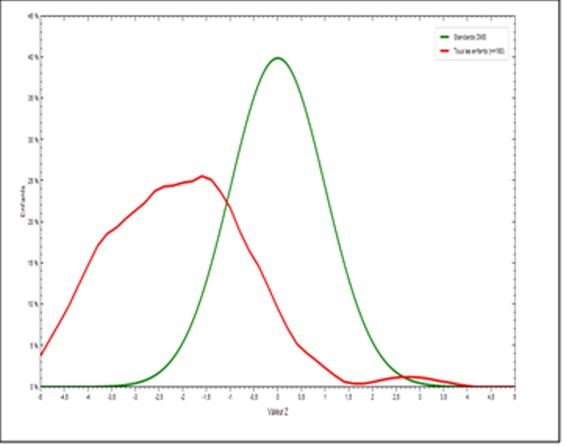
Download figure
Figure 7. Indice P/A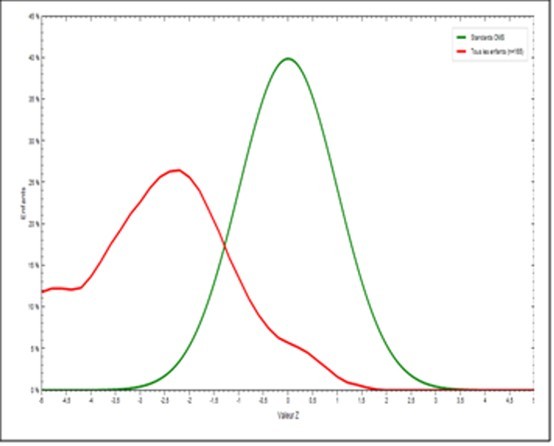
Download figure
Figure 8. Indice P/T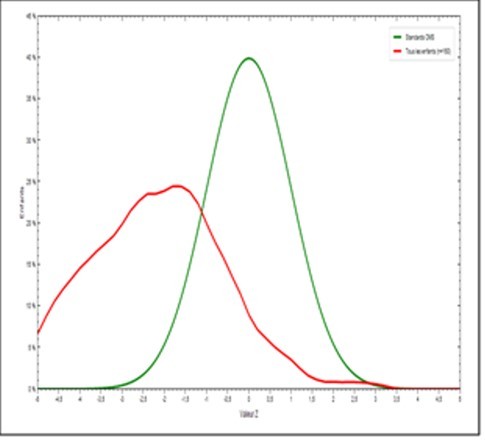
Download figure
Assessment of the management of malnutrition in children seen for consultation
Table 2 shows that 87.9% of moderately malnourished people were cured compared to 12.1% who abandoned treatment (no longer arrived for appointments). Furthermore, 92.6% of the severely malnourished were cured, compared to 5.9% who gave up and 1.5% cases of death were noted (because they were received in a very critical and desperate state).
Table 2. Distribution of malnourished people treated| Malnutrition | Moderate | Severe | ||
|---|---|---|---|---|
| Balance sheet | Effective | Frequency in % | Effective | Frequency in % |
| Healed | 51 | 87.9 | 63 | 92.6 |
| Let's give up | 7 | 12.1 | 4 | 5.9 |
| Death | 0 | 0 | 1 | 1.5 |
| Total | 58 | 100 | 68 | 100 |
Malnutrition and associated factors
The results in Table 3 show that several factors are significantly associated with malnutrition in children. Exclusive breastfeeding is linked to a lower prevalence of severe malnutrition (p = 0.0075). Gradual weaning is also associated with a better nutritional situation compared to abrupt weaning. Likewise, there is a significant relationship between malnutrition and the type of withdrawal (p = 0.000). Marital status and household type are significantly related to malnutrition, with a higher prevalence of severe malnutrition among children of single mothers (36.06%) and polygamous households (49.52%). On the other hand, the mothers' education level did not seem to have an impact on child malnutrition (p= 0.53).
Table 3. Malnutrition and associated factors| Factors | Malnutrition | P-value | |
|---|---|---|---|
| Breastfeeding | Moderate | Severe | 0.0075 * |
| Exclusive breastfeeding | 13.49% | 4.76% | |
| breastfeeding | 19.84% | 61.90% | |
| Type of withdrawal | 0.000 * | ||
| Brutal | 27.40% | 50% | |
| Progressive | 24.60% | 12.70% | |
| Education level | 0.53 | ||
| Uneducated | 15.86% | 40.86% | |
| Educated | 29.81% | 14.46% | |
| Marital status | 0.000 * | ||
| Stay at home mother | 39.90% | 13.46% | |
| Single mother | 10.58% | 36.06% | |
| Type of fireplace | 0.000 * | ||
| Monogamous | 20.19% | 6.73% | |
| Polygamous | 23.56% | 49.52% | |
Discussion
Malnutrition is a major public health issue that affects millions of people worldwide, particularly children. It is one of the deadliest conditions, especially in this segment of the population. In this context, the present study aimed to identify the determinants of malnutrition in children under 5 years old admitted to the Papanè hospital. To do so, we assessed the demographic characteristics, weaning practices, vaccination status, as well as the health and nutritional status of children seen in this center. Several factors were associated with malnutrition, which manifested in several critical forms, including a high prevalence of stunted growth, underweight, and wasting. Indeed, the analysis of the general characteristics of the population showed that the majority of the children included in this study were male (55%), with a sex ratio of 1.2 against girls. These results are consistent with several studies conducted nationally and internationally, including those by 12 in Iceland in the city of Bougainville, 13 in Burkina Faso, and 14 in Benin, specifically in the communes of Kérou, Kouandé, and Péhunco. However, these results differ from those obtained by 15 in the Pendjari plain in northwest Benin, where a sex ratio of 0.85 in favor of girls was observed. Our results could indicate greater vulnerability among boys or a sociocultural tendency to prioritize medical care for boys in the commune of Tchaourou. The most represented age group, accounting for 32.69%, is that of children aged 6 to 12 months. This result is similar to those obtained by 16 in the regions of Dakar and Thiès in Senegal, as well as by 17 in Egypt. This observation can be explained by the fact that this age group corresponds to the crucial period of weaning. During this time, children are particularly vulnerable to infections due to inadequate weaning practices. Moreover, the nutritional needs of children in this age group must be met by a balanced diet that replaces breast milk. Poor management of this transition can lead to nutritional deficiencies.
Furthermore, our results show that the legal guardians of the children are mostly housewives (45.67%) and uneducated (56.73%). These results are very similar to those obtained by 7, who observed that the majority of the mothers of the children interviewed in their study were agricultural workers (34%) and 67% were uneducated. In contrast, 18 found different results, showing that only 29% of the mothers/guardians of the children admitted to the Kwale health and demographic surveillance system in Kenya were uneducated. In light of these results, it is urgent and important to improve nutritional education and awareness in these groups for better nutritional management of children in households. The results concerning weaning methods indicate that the majority of children (77.40%) were abruptly weaned, meaning they were not exclusively breastfed. This result is in line with those found by 19, who recorded 371 abruptly weaned patients (80%). Furthermore, only 11% of the children seen in consultation at the Papanè hospital were exclusively breastfed. This rate is similar to that recorded in Yemen (12%) during the National Health and Demographic Survey conducted by the Ministry of Public Health and Population in 2015. However, remarkable progress has been noted in this area in other countries, leading to increased rates of exclusive breastfeeding. This is the case in India and Indonesia, where rates exceed 50% 20. Given the very low rate of exclusive breastfeeding observed in our region, increased awareness of the benefits of this practice is necessary, given its numerous advantages for the health of mothers and infants, as well as the associated reductions in healthcare costs.
The analysis of vaccination coverage results reveals a rate of 40.86%. This result is well below that reported by 21, who found a rate of 68% in Senegal. In comparison, vaccination coverage reaches nearly 100% in China’s Guizhou province. However, this rate is comparable to that found in India during a study on infant vaccination coverage in the urban slums of Delhi 22. This low rate observed can be attributed to the resistance of certain populations to modern medical methods, preferring to maintain their traditional practices of care. Vaccination, which allows the body to recognize and fight the infectious agent, reduces the risk of contracting or spreading the disease. In this context, it is essential to organize expanded vaccination campaigns to improve the immunization of mothers and children in this locality. The health status of children seen in consultation at the Papanè health center is critical, with 35.10% suffering from diarrhea. This rate is significantly higher than that obtained by 23. The presence of symptoms such as diarrhea can be a precursor to malnutrition and vice versa, creating a vicious cycle of disease and malnutrition. The assessment of the nutritional status of the children revealed that 74.88% of the patients suffered from stunted growth, 79.43% from underweight, and 90.34% from wasting. These rates are well above those reported by several authors, such as 24, 7, and 25. Several factors may explain these differences. First, the children included in the study were already ill at the time of hospital admission, which substantially increases the likelihood of observing severe cases of malnutrition in this hospital-based population. Second, the study was conducted at the beginning of the rainy season in the north, a period often marked by disease outbreaks, particularly among children under five. Third, this period is the lean season, when access to food is often very limited, especially for poor families. Finally, the low educational level of the parents or guardians of the children also contributed to these worrying results. Furthermore, the distribution curves of the T/A, P/A, and P/T indices are skewed to the left, indicating a critical undernutrition situation in this part of Tchaourou. This result is consistent with those obtained by several authors in their respective studies, as well as other surveys 26, 27, 28. The similarity of these results further underscores that the issue of undernutrition is a public health concern.
The outcomes of the management of malnourished children in the pediatric department were as follows: 92.6% of the children suffering from severe malnutrition recovered, while 5.9% abandoned treatment and 1.5% died, having been admitted in a critical and hopeless condition. These results are comparable to those obtained by 29, who showed that 90.44% of severe acute malnutrition (SAM) cases were successfully treated, 3.68% died, and 2.20% abandoned treatment. In contrast, another study conducted by 30 reported a low recovery rate (61.6%) and a high mortality rate (26.7%) compared to the various rates obtained in this study. The comparison of these results indicates that, in the area where our study was conducted, the healthcare system and technical staff have done a remarkable job in the fight against malnutrition. However, additional efforts are needed to achieve a zero mortality rate among children. Exclusive breastfeeding is associated with a lower prevalence of severe malnutrition (p = 0.0075). Gradual weaning is also associated with a better nutritional situation compared to abrupt weaning. Similarly, there is a significant relationship between malnutrition and the type of weaning (p = 0.000). The marital status and type of household are significantly related to malnutrition (p = 0.000), with a higher rate of severe malnutrition among children of single mothers (36.06%) and polygamous households (49.52%). This result is corroborated by those of 31, who found that children not exclusively breastfed before 6 months (OR = 16.44 (3.93-68.8)) are more likely to suffer from acute malnutrition. However, other authors have obtained different results. 32 Identified determinants of malnutrition such as the mother’s level of education (less than 7 years), the absence of a potable water tap in the household, male gender, and age over 11 months. Additionally, decreased appetite and diarrhea were significantly associated with malnutrition. According to 33, dietary diversity is the main determinant of malnutrition. These results clearly show that a multitude of factors are associated with malnutrition. For an effective fight against this scourge, a multidimensional approach would be more appropriate.
Conclusion
This study highlighted the factors contributing to malnutrition among children under five years old seen at the Pediatric Department of Saint Martin Hospital in Papané. The results reveal a high prevalence of malnutrition in its various forms: stunted growth, wasting, and underweight. The main associated factors include inadequate feeding practices, such as the lack of exclusive breastfeeding and abrupt weaning, as well as unfavorable socio-economic conditions, such as low maternal education levels and polygamous households. To effectively combat this issue, a multidimensional approach that incorporates nutritional, educational, and social interventions is necessary to improve the nutritional status of children in this region.
References
- 1.Breewood H. University of Oxford (2018) What Is Malnutrition? (Source: Building Blocks). Food Climate Research Network. 20, p.
- 2.V K Grebmer, Headey D, Bene C, Haddad L, Olofinbiyi T et al. (2013) Global Hunger Index: The Challenge of Hunger: Building Resilience to Achieve Food and Nutrition Security. Intl Food Policy ResInst. 63 p
- 4.UNICEF. (2019) The State of the World's Children, Analytical Summary, Growing Well in a Changing World. 24 p
- 5.Africa. (2023) Regional Overview of Food Security and Nutrition 2023: Statistics and Trends. https://doi.org/10.4060/cc8743en , Accra, FAO
- 6.National. (2019) Institute of Statistics and Economic Analysis, Fifth Demographic and Health Survey. in Benin, Ministry of Planning and Development (EDSB) , Cotonou, Benin 165.
- 7.Bouko Boni Orou Marius Bio. (2021) Abdou Ganiou Yessoufou, Amirath Adégnika Adebo, Justin Behanzin, Alphonse Sezan. Food Production and Nutritional Status of Children Under Five in the Atacora Department (Northwest Benin). Antropo. 45, 29-37.
- 8.INSAE PAM. (2013) Global Analysis of Vulnerability and Food Security, Republic of Benin, Final Report. 146.
- 11.WHO. (1995) Use and Interpretation of Anthropometry: A Report of a WHO Expert Committee. Technical Report Series 854. Geneva 29.
- 12.Hall J, Walton M, F Van Ogtrop. (2020) Factors Influencing Malnutrition. in Children Under 5 in Cocoa-Producing Communities in Bougainville. BMJ Global Health 5, 002478.
- 13.Kaboré A, Ouédraogo S, Dao L, Koueta F, Yé D. () Acute Malnutrition and HIV Infection in Children Followed at Charles de Gaulle Pediatric University Hospital: Evolution of Anthropometric Parameters Under Antiretroviral Treatment. Open Journal of Pediatrics 2016, 34-41.
- 14.Bouko Bio, Yessoufou M, A G Behanzin, Yessoufou J, K A et al. (2018) . Prevalence of Malnutrition Among Children Under 5 Years in the Municipalities of 2kp (Kérou, Kouandé, and Péhunco) in , Northern Benin 1295-1297.
- 15.Bouko Boni Orou Marius Bio. (2019) Abdou Ganiou Yessoufou, Justin Behanzin, Amirath Adégnika Adebo, and Alphonse Sezan. Relationship Between Dietary Diversity and Nutritional Status of Children Under Five in the Pendjari Plain in Northwestern Benin. EJPMR 6(8), 38-43.
- 16.Seck N, Basse I, Boiro D, Keïta Y, Thiam L et al. (2021) Management of Severe Acute Malnutrition in a Senegalese Pediatric Hospital. Open Journal of Pediatrics 11, 198-207.
- 17.Shaaban S, Nassar M, El-Gendy Y, El-Shaer B. (2019) Nutritional Risk Screening of Hospitalized Children Aged < 3 Years. East Mediterr Health J 25(1), 18-23.
- 18.Ndemwa Morris, Wanyua Sheru, Kaneko Satoshi, Karama Mohammed. (2017) Makokha Anselimo. Nutritional Status and Association of Demographic Characteristics with Malnutrition. in Children Under 24 Months in Kwale County, Kenya. Pan African Medical Journal 28, 265-10.
- 19.Traore F, Maiga B, Diall H, Sissoko S, Sacko K et al. (2020) Management of Acute Malnutrition in Children in a Sahelian Secondary Hospital. Mali Med. 35(2), 32-37.
- 20.Ahsan Sameen, Jain Sakshi, Walters Dylan. (2022) Nutrition International. The Global Cost of Not Breastfeeding. 8, p..
- 21.Cortaredona S, Diop R, Seror V, Sagaon-Teyssier L, Peretti-Watel P. (2020) Regional Variations of Childhood Immunizations in Senegal: A Multilevel Analysis. Trop Med Int Health. Doi: 10.1111/tmi.13455. Epub 25(9), 1122-1130.
- 22.Devasenapathy N, Jerath Ghosh, Sharma S, Allen S, Shankar E et al. (2016) Determinants of Childhood Immunisation Coverage in Urban Poor Settlements of Delhi, India: A Cross-Sectional Study. BMJ Open 6(8), 10-1136.
- 23.Sidibe D. (2021) Assessment of the Relationship Between Malnutrition and Diarrhea in Children Under Five in the Nara Circle, Koulikoro Region, PhD Thesis,https://www.bibliosante.ml/handle/123456789/4941. 117.
- 24.G R, Cairns M, Y D Compaoré, Sagara I, Kuepfer I et al. (2020) Effect of Adding Azithromycin to the Antimalarials Used for Seasonal Malaria Chemoprevention on the Nutritional Status of African Children. Trop Med Int Health. Doi: 10.1111/tmi.13390. Epub 25(6), 740-750.
- 25.Puttaswamy D, Ramesh V, Raj T, K G Bhat, Selvam S et al. (2024) . Nutritional Status and Body Composition at Diagnosis of South Indian Children with Acute Lymphoblastic Leukemia (ALL). Asian Pac J Cancer Prev 25(7), 2361-2369.
- 26.National. (2009) Institute of Statistics and Economic Analysis, Global Analysis of Vulnerability, Food Security, and Nutrition (AGVSAN), Republic of Benin. 168.
- 27.Diarra B. University of Bamako (2010) Evaluation of Nutritional Status of Children Aged 0 to 59 Months in 4 Circles of the Tombouctou Region (Rural Area), PhD Thesis. , Mali 124.
- 28.MSAS. (2016) Ministry of Health and Social Action, Directorate of Reproductive Health and Child Survival. National Nutritional Survey Using the SMART Methodology, Senegal.188 , Final Report Data Collection from September 27, p..
- 29.M’BAYE Mohamed, MAÏGA Mariam, TRAORE Seydou, TOGOLA Issiaka. (2022) . Issues in the Management of Severe Acute Malnutrition with Complications in Children Aged 0 to 59 Months in Bamako: The Case of the Reference Health Center of Commune VI. GSJ 10, 2320-9186.
- 30.Eugène MOLASO EKOMBE, Jean-Louis MALUKU MABOSO, Eugène PANDALA TROIS, Dina IPOLO Madeleine, Florent MOLUANGO BENDO. (2023) . Issues in the Management of Severe Acute Malnutrition in Children Aged 0 to 5 Years in the Karawa Health Zone. International Journal of Progressive Sciences and Technologies (IJPSAT) 41(2).
- 31.B M Traoré, I S Goïta, Sangara A, Sy O, Boly A et al. (2020) Determinants of Acute Malnutrition. in Children Aged 6-59 Months in the Menaka Health District. Mali Med 35(3), 40-44.